

FAQs
About the Referendum
-
If approved, the new levy would raise a total $1,050,000 a year for 10 years, starting with taxes paid in 2027. The new levy would be used to protect the strong academics, preserve student programs, reduce the need for future cuts, maintain a healthy fund balance (savings account), and retain and recruit quality staff.
-
If the referendum fails, Benson Public Schools will face a projected $800,000 in cuts (about 6.5% of the total budget) for the 2027-28 school year. The list below shows possible program and staff reductions under consideration, with estimated costs. A thorough staff and community engagement process will precede any formal school board action.
Possible program and staff reductions under consideration:
Reduce superintendent hours by 25%
Reduce administrative support
Implement a 4-day school week
Profession development reassigned to general fund
Reduce a bus route
Increase elementary class sizes (Grades K-5)
Reduce course electives for students (Grades 6-12)
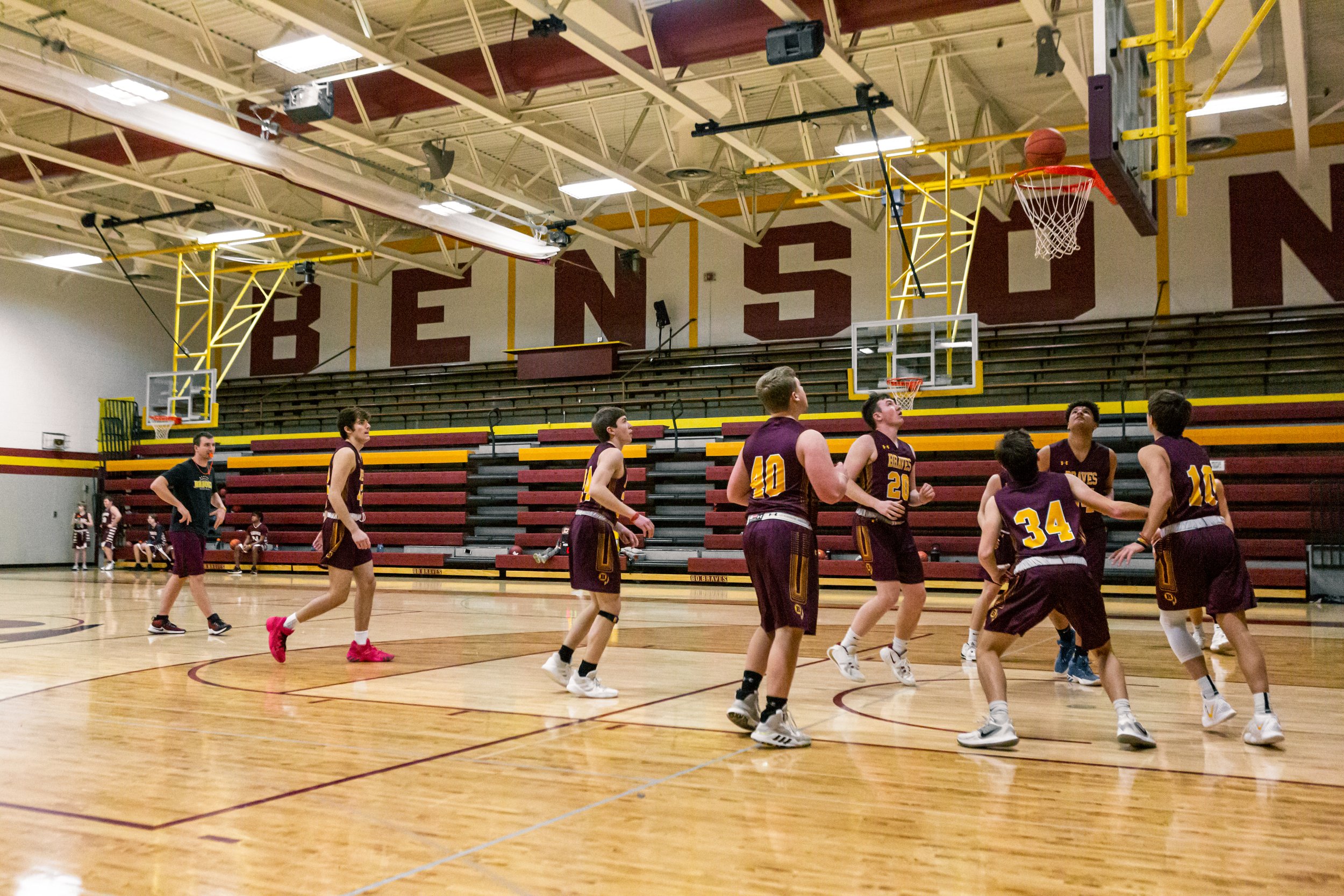
Reduce athletics and activities
Reduce academic and behavioral support services
Reduce physical and mental health student support services
-
Levies are for learning, bonds are for building. When communities support an operating levy, they are providing the district general funds to use for teachers’ salaries, textbooks, co-curricular programs, transportation, computers, utilities and the general operation of the district.
On the other hand, a bond referendum provides districts dollars to make improvements to facilities and building infrastructure only. Bonds cannot be used to hire teachers, buy textbooks, or for the operation of the district such as utilities.
-
Yes, agricultural land owners pay school operating levies on ONE acre of property that includes the house and garage, not on all of your property.
-
A levy provides day to day funding that the district needs to function. Without that additional revenue, the district has to cut costs to balance the budget. Students may feel an impact through higher class sizes, fewer programs, and reduced support.
-
The school board voted unanimously to ask voters to consider an operating levy that would give the district $700 more per student each year; about $522,000 more each year for the district. If approved, the new levy would raise a total $1,050,000 a year for 10 years, starting with taxes paid in 2027.
-
Minnesota law allows an operating levy to last up to 10 years, and 10 years is a common length for most school districts. If approved, it would provide money for the 2027-28 through 2036-37 school years. A 2023 state law lets a school board renew a levy once without a vote, but only for the same amount. This levy asks for more money. The district is requesting additional support because state funding hasn't kept up with rising costs, and it is spending more than it takes in due to unfunded mandates, rising costs, and inflation. Because the amount is going up, voters must decide in a referendum.
-
A similar referendum request didn't pass last year, and looking back, we simply didn't communicate enough. This time, we're committed to a robust plan to educate all stakeholders with clear and timely communications. We're coming to you to explain the need, the plan, and the real costs, and to show and tell everyone about the exceptional opportunities Benson Public Schools offers for every student's success.
DID YOU KNOW? The last operating levy was approved by Benson Public Schools residents in 2013. A bond referendum for building was approved in 2019..
About School Finances
-
Benson School District has one of the lowest tax rates among neighboring districts, many of which face similar financial pressures. CLICK HERE for more information.
-
A fund balance is a savings account. When unexpected expenses occur, such as the phone system dies, we need to replace it immediately, and it is more cost effective to use money in the bank than to borrow money.
-
A constitutional amendment is on the ballot to increase the amount of the Permanent School Fund that is distributed each year to schools. The Permanent School Fund already exists. This isn't a new fund or a new tax — it's been part of Minnesota since statehood in 1858. This amendment does not raise taxes. Not property taxes, not income taxes — nothing. All this amendment does is update how the fund distributes the money it already has to schools.
For Benson Public Schools, approval would provide approximately:
$20,600/year in additional annual funding
Approximately 0.1668% of the district’s budget
ZERO tax increase to residents
While appreciated, this amendment has a very minimal impact on Benson’s financial challenges and does not replace the need for the operating levy. Learn more about the Constitutional Amendment: mnpsfamendment.org -
The State of Minnesota has made important new investments in preK-12 schools during recent legislative sessions, but those investments only helped Benson and other school districts partly catch up from more than a decade of funding schools lower than the rate of inflation. Schools received the following increases:
2.69% for 2026-2027
2.7% for 2025-2026
2% for 2024-25
4% for 2023-24
These new revenues, while helpful, are not sufficient to fully fund these and other State and Federal mandates, to make up for decades where funding did not keep pace with inflation, or to make up for today’s high inflation. These investments are welcome but won't enable Benson to help all students compete and thrive in a changing world.
-
The district has worked hard to be a good steward of the public’s tax money. We have made difficult decisions to reduce our budget by more than $300,000 this year. We have an underlying “A” credit rating from S&P Global Ratings and a “AAA” credit-enhanced rating through the Minnesota School District Credit Enhancement Program, which indicates the district’s strong creditworthiness in spite of our necessity to use reserves to fund our operations and our debt burden.
About School Enrollment
Benson Public Schools started the 2025-26 school year with 692 students and ended it with 665.
This FAQ explains why enrollment is declining, what the District plans to do, and how transportation works for open enrolled students.
-
Some Benson students choose to attend school elsewhere: in nearby districts, online, or at home. Families have their own reasons, including core values and religious beliefs, location, and concerns about student behavior.
-
Fall 2026, 179 students are open enrolled out of Benson Public Schools. The majority of students attend Kerkhoven-Murdock-Sunburg (KMS) School District, Hancock Public Schools, or online learning programs.
-
Not significantly. The City of Benson had 5,663 residents in 2020 and 5,647 in 2025, a change of fewer than 20 people.
-
Yes. The 2026-27 kindergarten class is 9 students smaller than last year's graduating class. Five of those kindergarten-age students physically moved away from Benson.
This is a statewide trend and an enrollment challenge facing all Minnesota schools.
-
Funding follows students. When a student enrolls elsewhere, the funding for that student goes with them.
-
Yes. Girls Ranch students are included in Benson Public Schools enrollment figures. As referenced above, the funding for these students goes to the Girls Ranch.
-
Under Minnesota law, Benson Public Schools does not have to bus students who choose to open enroll in another school district. The resident district is not required to provide or pay for transportation between the pupil's residence and the border of the nonresident district.
-
If requested, a nonresident district shall transport a nonresident pupil within its borders, so Benson must bus students who open enroll in from other districts once they are inside the Benson district boundary. Outside that boundary, families are generally responsible for getting their child to a Benson bus stop.
-
Yes. A 2024 change to state law requires that, for a pupil who is a child with a disability, the nonresident district must transport a pupil within the pupil's resident district when transportation is part of the student's individualized education program.
-
After Election Day, district leaders plan to learn why families are leaving and what can be done. Superintendent Dr. Julie Beddow-Schubert will reach out to each of the 28 families who enrolled out to learn their reasons.